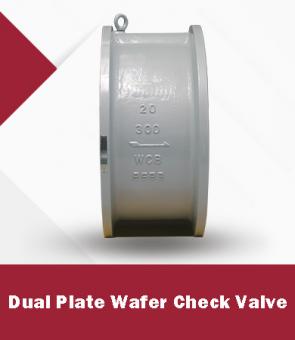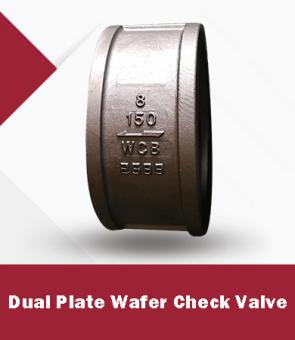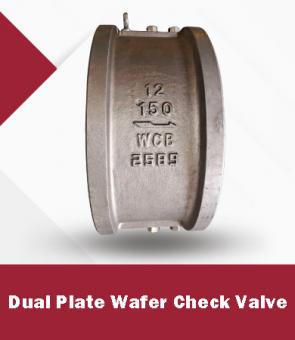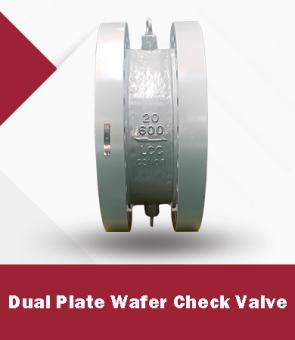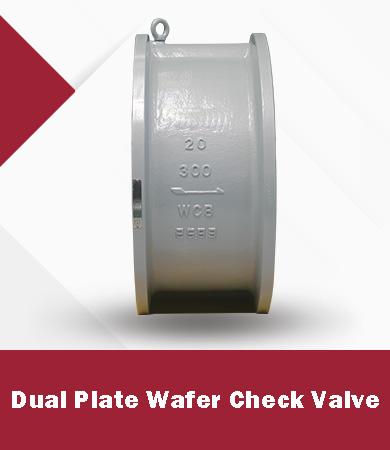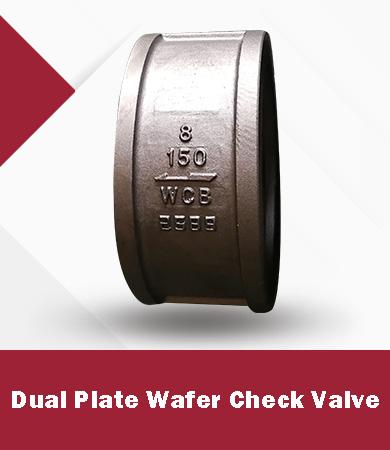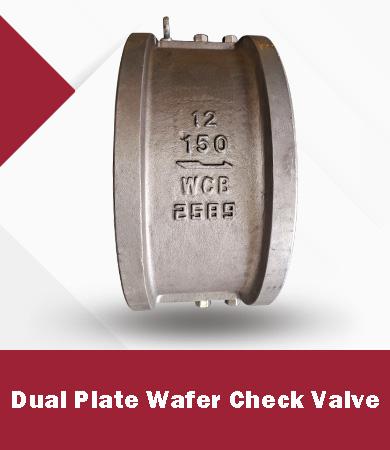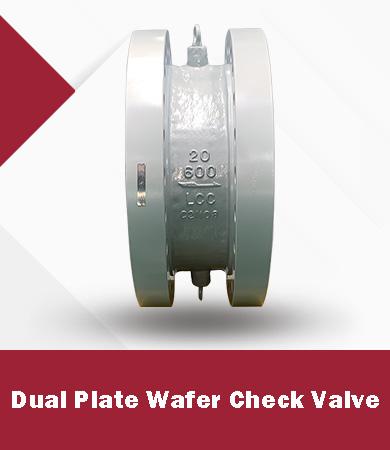
A dual plate wafer check valve is compact, light, and suitable for installation between pipeline flanges, but its service life depends on more than the body material shown on a data sheet. The body, plates, hinge and stop pins, springs, seat, coating, and fasteners all face different combinations of pressure, temperature, corrosion, erosion, and cycling.
For water, oil, gas, cooling, fire protection, and general industrial systems, the correct material package should be selected from the actual medium and operating conditions. A WCB body may be appropriate for one line, while stainless steel, low temperature carbon steel, duplex steel, or a special alloy may be required for another. The seat choice is equally important because it controls shutoff performance and often sets the practical temperature limit.
|
Component |
Common options |
Selection focus |
|
Body |
WCB or WCC carbon steel, LCC low temperature steel, CF8 or CF8M stainless steel, ductile iron, duplex or special alloy |
Pressure class, temperature, corrosion, piping specification, flange compatibility |
|
Plates |
Stainless steel, carbon steel with overlay or coating, duplex or alloy |
Corrosion, erosion, impact at closing, seat compatibility |
|
Springs |
Stainless steel, Inconel or other qualified spring alloy |
Cycle life, temperature, corrosion, closing response |
|
Pins |
Stainless steel, precipitation hardening steel or qualified alloy |
Wear, galling, corrosion, bearing load |
|
Seat |
EPDM, NBR, PTFE, FKM or metal seat |
Temperature, chemical compatibility, leakage target, fire and wear requirements |
Carbon steel bodies such as ASTM A216 WCB are widely used in oil, gas, water, and general industrial service when corrosion is controlled and the temperature range is suitable. ASTM A352 LCC is commonly considered for lower temperature duties where impact properties and project requirements must be satisfied. Cast stainless steels such as CF8 and CF8M provide improved corrosion resistance, while duplex and nickel alloys may be considered for chloride-bearing or more aggressive media after a service-specific review.
The plate material does not have to match the body, but every material combination should be checked for galvanic compatibility, corrosion allowance, erosion resistance, and seat interaction. In large valves or high-velocity service, plate mass and closing impact also matter. A corrosion-resistant plate cannot compensate for an unsuitable spring, pin, seat, or body coating.
|
Seat type |
Typical advantage |
Important limitation |
|
EPDM |
Common choice for compatible water services and good resilient sealing |
Not a universal choice for petroleum oils or high temperature |
|
NBR |
Often selected for compatible oil, fuel, and water applications |
Temperature and chemical resistance must match the actual fluid |
|
PTFE |
Broad chemical resistance and low friction in many services |
Cold flow, pressure, temperature, and mechanical support require review |
|
FKM |
Useful temperature and chemical resistance for selected hydrocarbons |
Compatibility varies by fluid; steam and low temperature limits need checking |
|
Metal seat |
Higher temperature capability and resistance to some severe conditions |
Allowable leakage is normally greater than with a resilient seat unless a qualified design states otherwise |
· Water and wastewater: define water chemistry, solids, treatment chemicals, temperature, velocity, and whether an internal or external coating is required.
· Oil and refined products: identify the exact fluid, additives, aromatics, temperature, and required resistance of the elastomer or polymer seat.
· Natural gas and compressed gas: confirm pressure class, decompression behavior, seat permeability, fire-safe requirements, and fugitive-emission expectations where applicable.
· Seawater and chloride service: review pitting and crevice-corrosion resistance of the body, plates, pins, springs, and fasteners instead of specifying stainless steel generically.
· High temperature service: confirm the complete pressure-temperature rating and consider metal seating and suitable spring alloys when resilient seats exceed their qualified range.
· Nominal size, pressure class, flange standard, and required face-to-face standard
· Medium composition, design and operating pressure, design and operating temperature
· Preferred body, plate, pin, spring, and seat materials or the governing piping specification
· Horizontal or vertical installation, flow direction, pump operating conditions, and expected cycle frequency
· Required shell and seat test standard, leakage acceptance, coating, NDE, certificates, and marking
· Any sour service, fire-safe, low-temperature, oxygen, potable-water, or project-specific approval requirement
Is a stainless steel body always required for water service
No. Water chemistry, temperature, pressure, coating, maintenance, and project specification determine whether carbon steel, ductile iron, stainless steel, duplex steel, or another material is appropriate.
Can one seat material be used for water oil and gas
No. Seat compatibility must be checked against the exact fluid, concentration, temperature, pressure, and leakage requirement.
Does API 594 specify the complete material package
API 594 addresses design and performance requirements for applicable check valves, but the purchase specification and approved manufacturer design still need to define the required materials and service conditions.
What information is most important for a quotation
Provide size, pressure class, medium, pressure, temperature, flange standard, installation orientation, and required body and seat materials. These details prevent an unsuitable generic offer.
Tel: 86-0592-5185-378
Whatsapp :+86 199 9681 0137
Email : sales@dawalvalve.com



Friendly Links :

 Tel : 86-0592-5185-378
 Email : sales@dawalvalve.com